How to Control Mosquitoes in Your Yard: A Complete Guide for Texas Homeowners
Nothing ruins a Texas evening faster than a swarm of mosquitoes the moment you step outside. Whether you're grilling in the backyard, watching the kids play, or just unwinding on the patio after a long day, mosquitoes can make it nearly impossible to enjoy your outdoor space. The good news: controlling mosquitoes in your yard is absolutely doable — if you know where to start.
This guide walks you through the most effective ways to reduce mosquito populations on your property, from simple DIY steps you can do this weekend to professional treatments that provide lasting, season-long protection.
Why Your Yard May Be a Mosquito Magnet
Before you can control mosquitoes, it helps to understand why they're there in the first place. Mosquitoes need two things above all else: standing water to breed and shaded, humid areas to rest during the day. If your yard offers either — or both — you're going to have mosquitoes.
Common yard features that attract and harbor mosquitoes include:
- Standing water in birdbaths, flowerpot saucers, clogged gutters, low spots in the lawn, or any container left outside
- Dense shrubs, tall grass, and heavily shaded areas under trees or decks where mosquitoes shelter from the heat
- Ornamental ponds or water features without proper circulation
- Wood piles, tarps, or cluttered areas that collect moisture
- Natural drainage features or ditches that hold water after rain
In Texas Hill Country communities like Fair Oaks Ranch or Stone Oak, large wooded lots with mature oaks and natural landscaping can make this problem more pronounced. But the same principles apply whether you're on a quarter-acre suburban lot or a sprawling rural property.
Step 1: Eliminate Standing Water
This is the single most impactful thing you can do to reduce mosquitoes in your yard — and it costs nothing. A female mosquito only needs about a bottle cap's worth of stagnant water to lay her eggs, and larvae can develop into adult mosquitoes in as little as 7–10 days.
Walk your property and address every potential water source:
- Dump and refresh birdbaths: Change the water at least once a week. Mosquito larvae cannot complete their development cycle if water is refreshed regularly.
- Clean your gutters: Clogged gutters are one of the most overlooked mosquito breeding grounds. Leaves and debris hold moisture and create ideal conditions for larvae.
- Empty flowerpot saucers: Flip them over or drill drainage holes so water doesn't pool after rain or irrigation.
- Fix low spots in your lawn: Areas that stay soggy for days after rain can breed mosquitoes. Topdressing with soil or improving drainage eliminates the problem at the source.
- Cover or store containers: Wheelbarrows, buckets, kids' toys, and tarps all collect water. Store them upside down or under cover when not in use.
- Treat water features you can't drain: For ornamental ponds or rain barrels, use Bti (Bacillus thuringiensis israelensis) dunks — an EPA-registered, naturally derived larvicide that kills mosquito larvae without harming wildlife, pets, or beneficial insects.
Quick Tip: After a heavy rain, do a quick 10-minute lap of your property and dump any containers that collected water. This one habit, done consistently, can significantly reduce the number of mosquitoes emerging on your property.
Step 2: Reduce Resting Habitat
Adult mosquitoes spend most of the day resting in cool, dark, humid spots — waiting for the heat to break before they come out to feed. Reducing these resting sites around your yard limits how many mosquitoes can shelter on your property between feedings.
- Mow your lawn regularly and trim overgrown grass and weeds along fence lines and garden edges.
- Thin out dense shrubs and ornamental plantings, especially those close to the house, seating areas, or entry points.
- Clear leaf litter and organic debris from garden beds — decomposing leaves hold moisture and provide shelter.
- Stack firewood away from the house and off the ground to reduce humid, sheltered microhabitats.
- Trim tree branches to let more sunlight into heavily shaded areas of the yard, especially near the home's foundation.
These steps won't eliminate mosquitoes on their own, but they significantly reduce the carrying capacity of your yard — meaning fewer mosquitoes can take up residence even when populations are high in the surrounding area.
Step 3: Use Plants That Repel Mosquitoes
Certain plants naturally produce compounds that mosquitoes find repellent. While no plant alone will mosquito-proof your yard, strategic placement around seating areas can reduce activity in spots where you spend the most time.
Plants worth adding to your outdoor spaces include:
- Citronella grass: The source of the compound used in most mosquito candles and torches. Grows well in Texas and does best in containers you can move around patios.
- Lavender: Highly effective as a repellent and deer-resistant — a bonus in Hill Country neighborhoods with heavy deer traffic.
- Basil: One of the strongest natural mosquito repellents in the herb family, and it thrives in the Texas heat.
- Lemon balm: Easy to grow in Texas, though it spreads aggressively — plant in containers to keep it in check.
- Marigolds: A classic garden border plant that repels not just mosquitoes but a range of other insects as well.
These plants work best when leaves are brushed or crushed slightly to release their oils. Place them near doors, along walkways, and around outdoor seating areas for the most benefit.
Step 4: Apply a Barrier Spray Treatment
DIY source reduction and habitat modification go a long way — but on larger properties, heavily wooded lots, or during peak mosquito season, they're often not enough on their own. This is where professional barrier spray treatments make the biggest difference.
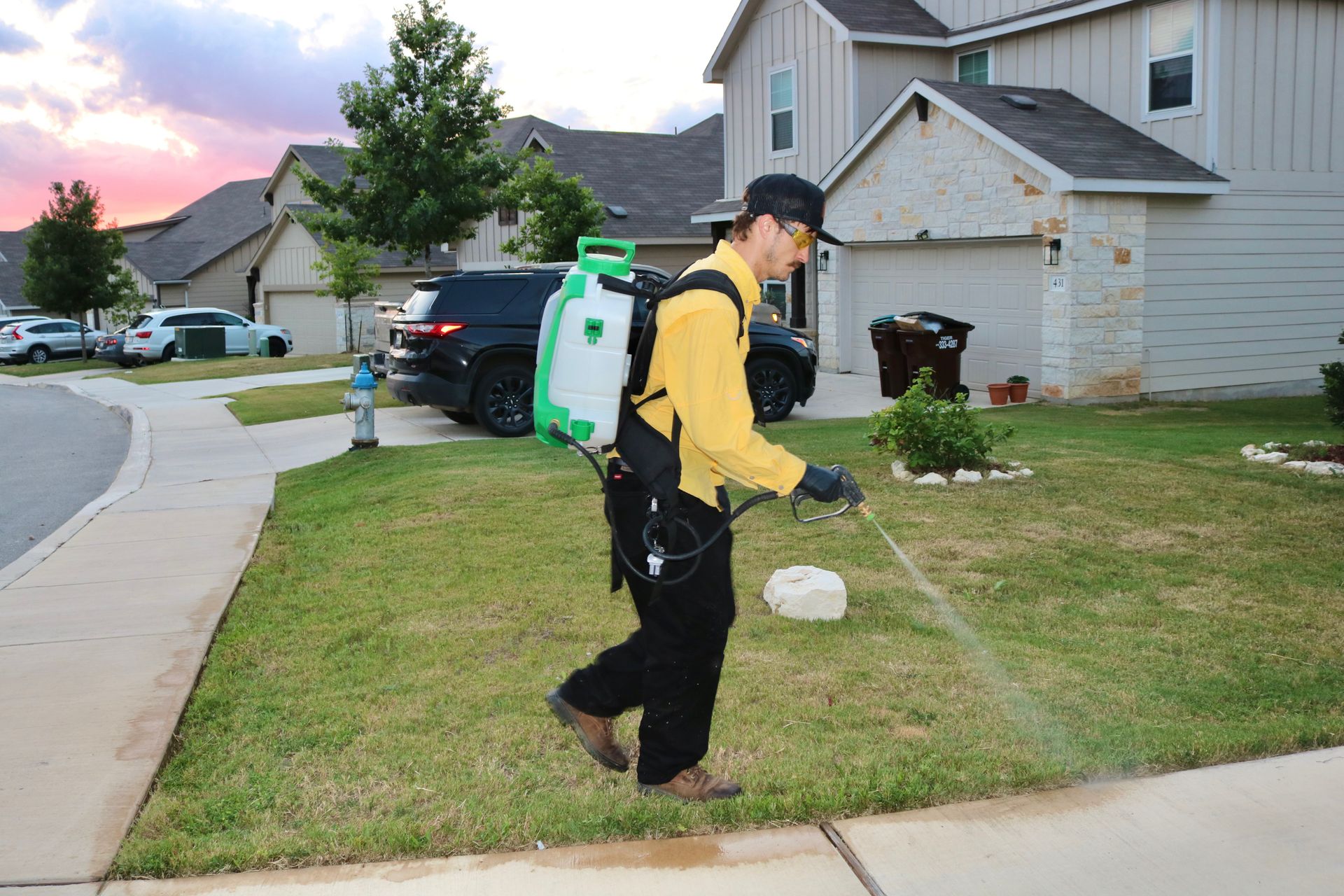
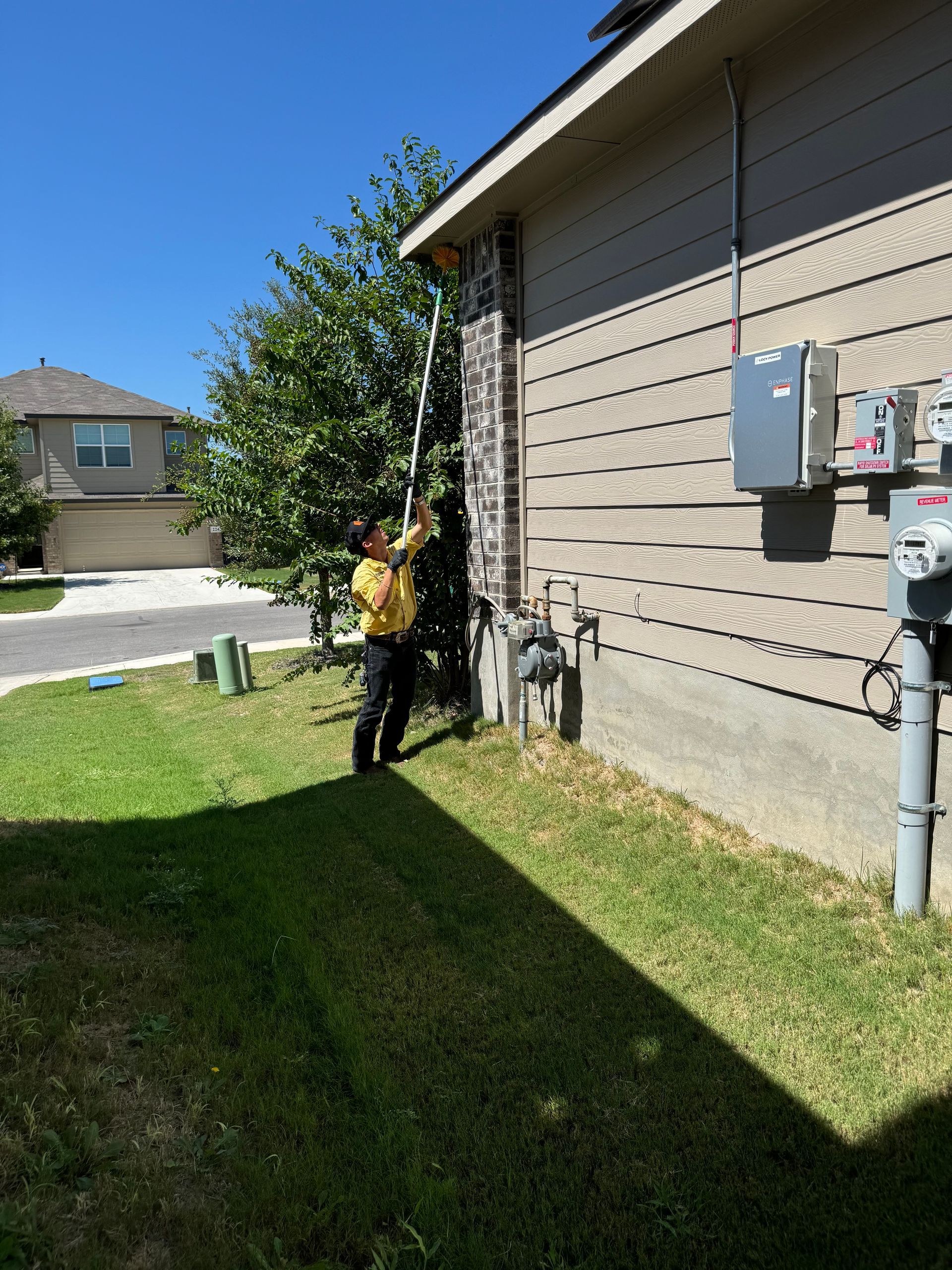
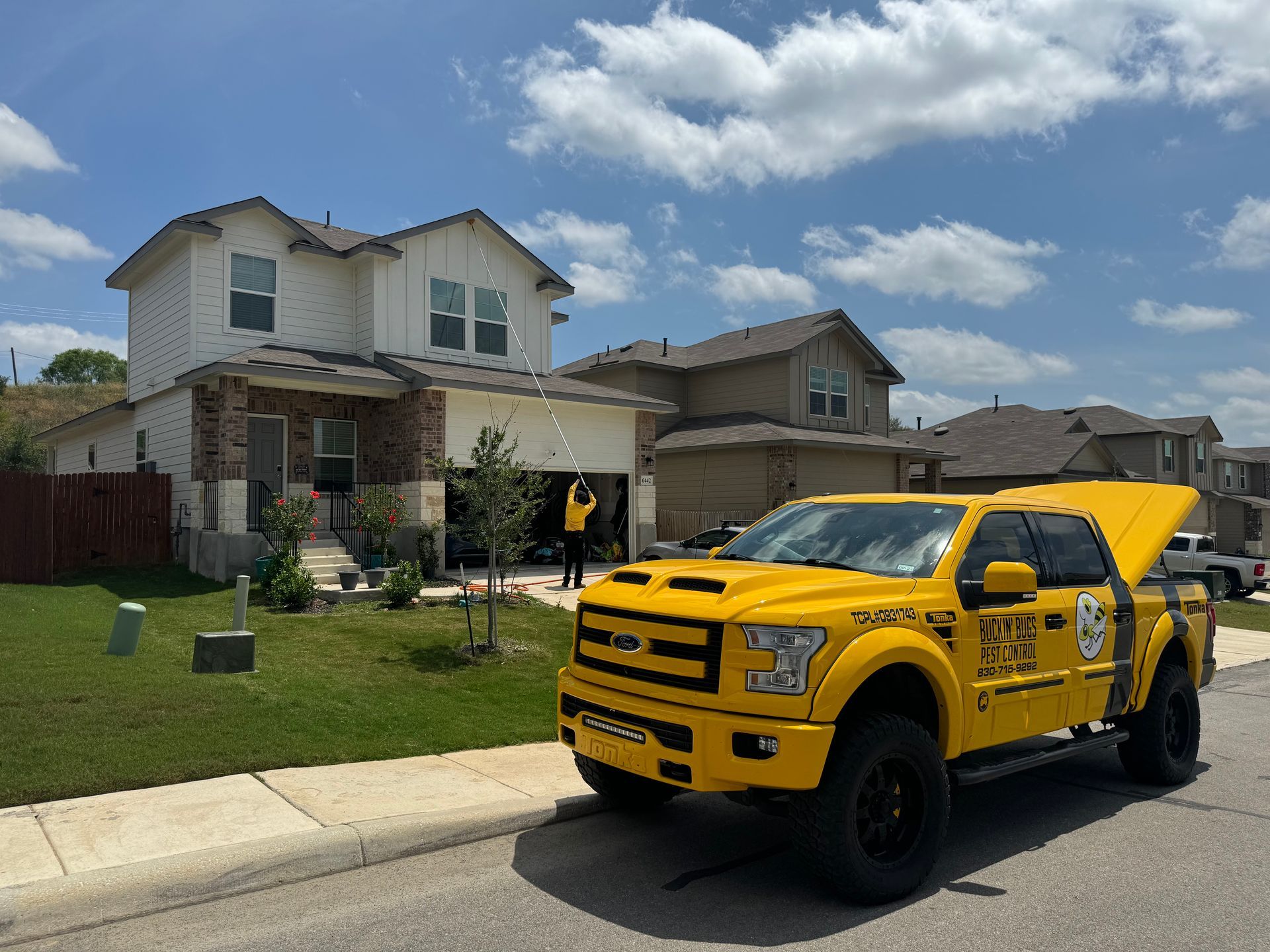
A barrier spray treatment involves applying a residual insecticide to the areas where mosquitoes rest — the undersides of leaves, shrubs, tall vegetation, shaded areas under decks, and around the perimeter of the yard. The product remains active on foliage for 3–4 weeks, killing mosquitoes that land in treated areas and significantly reducing the population on your property.
For Texas homeowners dealing with large lots, mature oak trees, or persistent mosquito pressure through a long season, a monthly barrier spray program through the active season (March through October) provides the most consistent protection.
Buckin' Bugs offers professional mosquito barrier spray treatments and seasonal programs designed for Hill Country properties. Learn more about our mosquito treatment services or call us for a free yard assessment.
Step 5: Protect Yourself While You're Outside
Even with the best yard management, some mosquito pressure will remain — especially during peak season or after rain. Personal protection adds an important layer:
- Apply an EPA-registered repellent containing DEET, picaridin, or oil of lemon eucalyptus. These are the most effective and well-studied options.
- Wear long sleeves and light-colored clothing during dawn and dusk, when mosquito activity peaks.
- Use outdoor fans on your patio or seating area — mosquitoes are weak fliers and a steady breeze makes landing and biting significantly harder.
- Install or repair screens on windows, doors, and screened porches to keep mosquitoes out of living spaces.
When to Call a Professional
If you've addressed standing water, trimmed your yard, and still find yourself fighting mosquitoes every time you go outside, it's time to call in professional help.
Some situations are especially difficult to control without professional-grade products and equipment:
- Large properties (half an acre or more) where the sheer volume of resting habitat is too much for DIY methods to address
- Yards adjacent to greenbelt areas, drainage channels, or bodies of water that continuously reintroduce mosquitoes from off your property
- Properties with water features or drainage issues that make complete source elimination impractical
- Households with young children, elderly family members, or individuals who are particularly sensitive to mosquito bites
Ready to take back your backyard? Buckin' Bugs provides
professional mosquito treatment services for homeowners throughout the San Antonio area — including barrier spray programs, larvicide applications, and free yard assessments. Call us or visit our website to get started.
☎ (210) 555-0100 | www.buckinbugs.com/mosquito-treatment
The Bottom Line
Controlling mosquitoes in your yard is a combination of consistent habits and the right treatments.
Eliminate standing water, reduce resting habitat, consider repellent plants, and invest in professional barrier treatments when the season — or the size of your property — demands it.
With the right approach, you can reclaim your outdoor space and actually enjoy the Texas evenings you've been missing.